$130m Avoca Drive upgrade: early start and staging notes for road engineers
Reviewed by Tom Sullivan
First reported on Roads & Infrastructure (AU)
30 Second Briefing
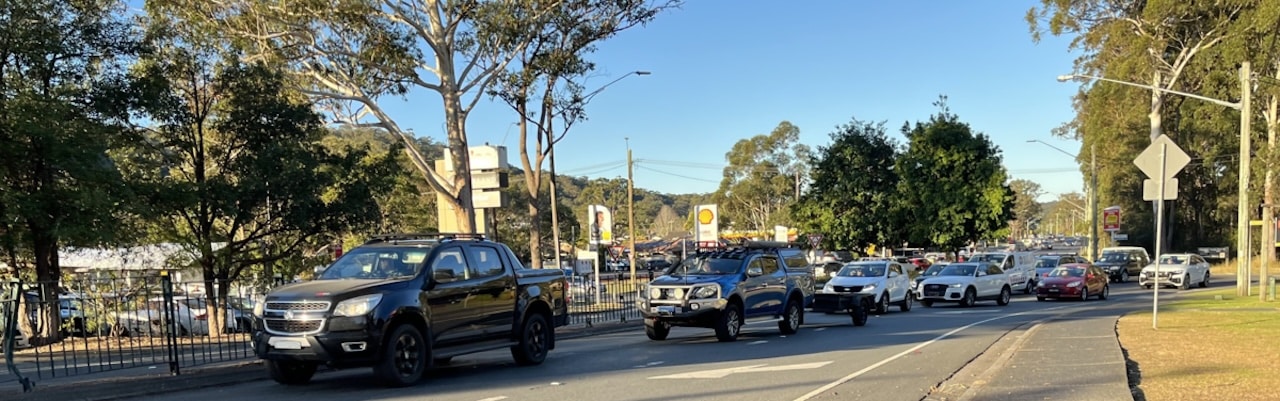
Stage One of New South Wales’ $130 million Avoca Drive Upgrade is starting 18 months early on the Central Coast, where the two-lane east–west arterial currently carries about 26,000 vehicles per day and is a known congestion pinch point. Funded by $100 million from the Federal Government and $30 million from NSW, the works will focus on upgrading Avoca Drive’s capacity and geometry. Civil contractors can expect complex traffic staging and pavement reconstruction on a constrained corridor that must remain operational throughout construction.
Technical Brief
- Stage One scope likely includes full-depth pavement reconstruction and intersection reconfiguration rather than simple resurfacing.
- Early mobilisation compresses design–procurement–construction interfaces, increasing reliance on constructability reviews and provisional design packages.
- Maintaining two-way traffic on a narrow corridor will drive use of night works and short work zones.
- Services congestion along an established arterial implies staged utility diversions and frequent live-service crossings.
- Pavement design will need to accommodate high daily load repetitions and frequent stop–start traffic at signals.
- Drainage upgrades are expected to manage concentrated runoff from adjacent urban catchments and steep side streets.
- Construction staging near residential frontages will trigger strict noise, vibration and access management requirements.
Our Take
Transport for NSW features repeatedly in our infrastructure coverage alongside joint Federal–NSW funding packages, such as the Great Western Highway works at Victoria Pass and Narooma Bridge planning, signalling a coordinated pipeline of state–federal road upgrades in New South Wales rather than isolated one‑off projects.
The $130 million Avoca Drive Upgrade sits in the same investment band as the $100 million Great Western Highway rebuild, suggesting that mid‑scale corridor upgrades are currently the preferred vehicle for Federal Government contributions in NSW rather than mega‑projects.
Prepared by collating external sources, AI-assisted tools, and Geomechanics.io’s proprietary mining database, then reviewed for technical accuracy & edited by our geotechnical team.


