£100m Rolls-Royce Bristol facility: design and services notes for engineers
Reviewed by Joe Ashwell
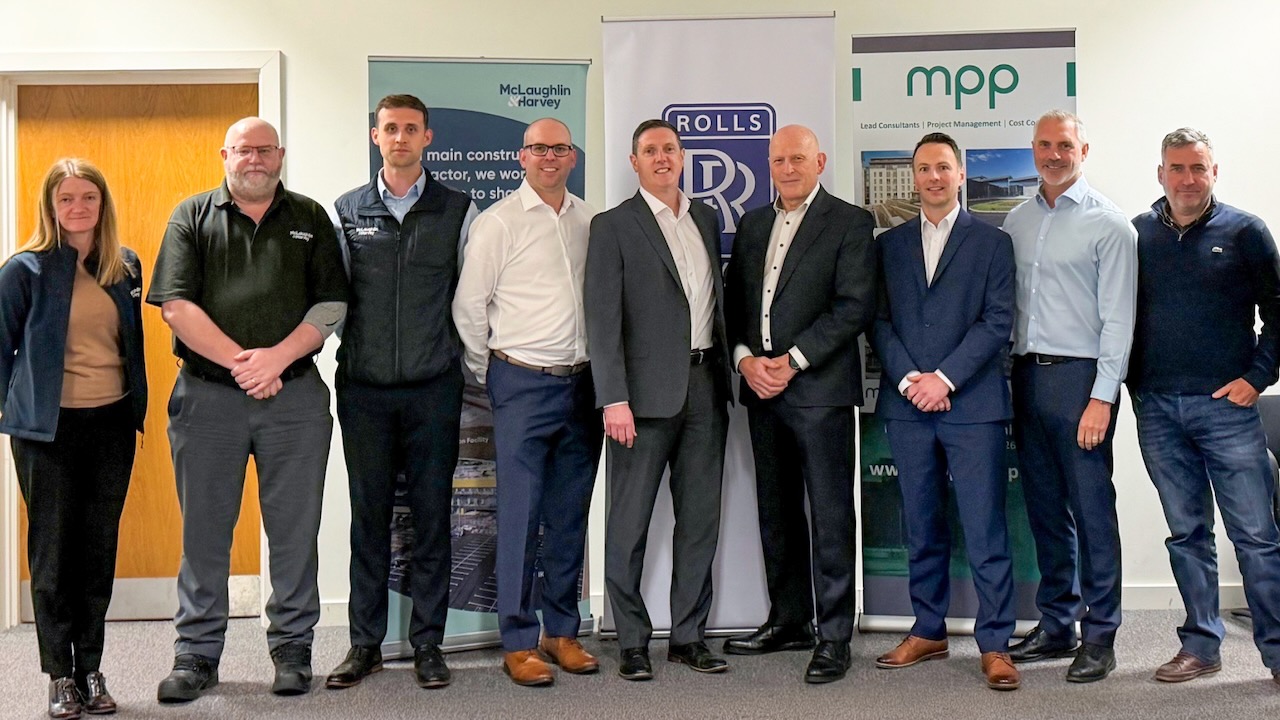
First reported on The Construction Index
30 Second Briefing
McLaughlin & Harvey has secured a £100m contract to build a new Rolls-Royce air combat facility in Bristol, providing integrated research, manufacturing and assembly space for next-generation aerospace propulsion. The complex will support novel technology development and agile production methods for future air combat programmes, with construction scheduled to start in late 2026 under Rolls-Royce’s defence infrastructure division. For engineers, the scheme signals upcoming demand for high-spec industrial building services, vibration control and precision environmental conditions to support advanced test and assembly operations.
Technical Brief
- Rolls-Royce describes the scheme as “complex”, implying non-standard structural grids, servicing and testing provisions.
- Previous infrastructure “learnings” are being embedded, suggesting repeatable layouts, modular services and standardised test interfaces.
- Design brief explicitly targets “decades” of use, so long-life, adaptable floorplates and over-capacity utilities are likely.
- For similar defence R&D facilities, early integration of vibration isolation, EMI control and secure logistics routes is becoming standard.
Our Take
McLaughlin & Harvey’s recent wins at Maraen Port of Nigg, Sheffield Forgemasters and the Whitesands Flood Protection Project indicate it is building a strong defence and critical-infrastructure portfolio in the UK, which aligns well with a high-spec Rolls-Royce air combat facility in Bristol.
In our infrastructure database, McLaughlin & Harvey appears repeatedly on complex, publicly backed or strategically sensitive schemes (MOD-backed recapitalisation at Sheffield, flood defences in Dumfries), suggesting Rolls-Royce is favouring a contractor already vetted for security, programme assurance and stakeholder-heavy delivery.
The 2026 construction start in Bristol lands in parallel with McLaughlin & Harvey’s other large UK commitments (e.g. the £30m Eastern Inner Dock Quay and major London commercial redevelopment at Thavies Inn House), so supply-chain and specialist labour planning across these geographically dispersed projects will be critical to avoid resource clashes.
Prepared by collating external sources, AI-assisted tools, and Geomechanics.io’s proprietary mining database, then reviewed for technical accuracy & edited by our geotechnical team.


