West Tarneit Station opening: capacity and corridor design notes for engineers
Reviewed by Tom Sullivan
First reported on Roads & Infrastructure (AU)
30 Second Briefing
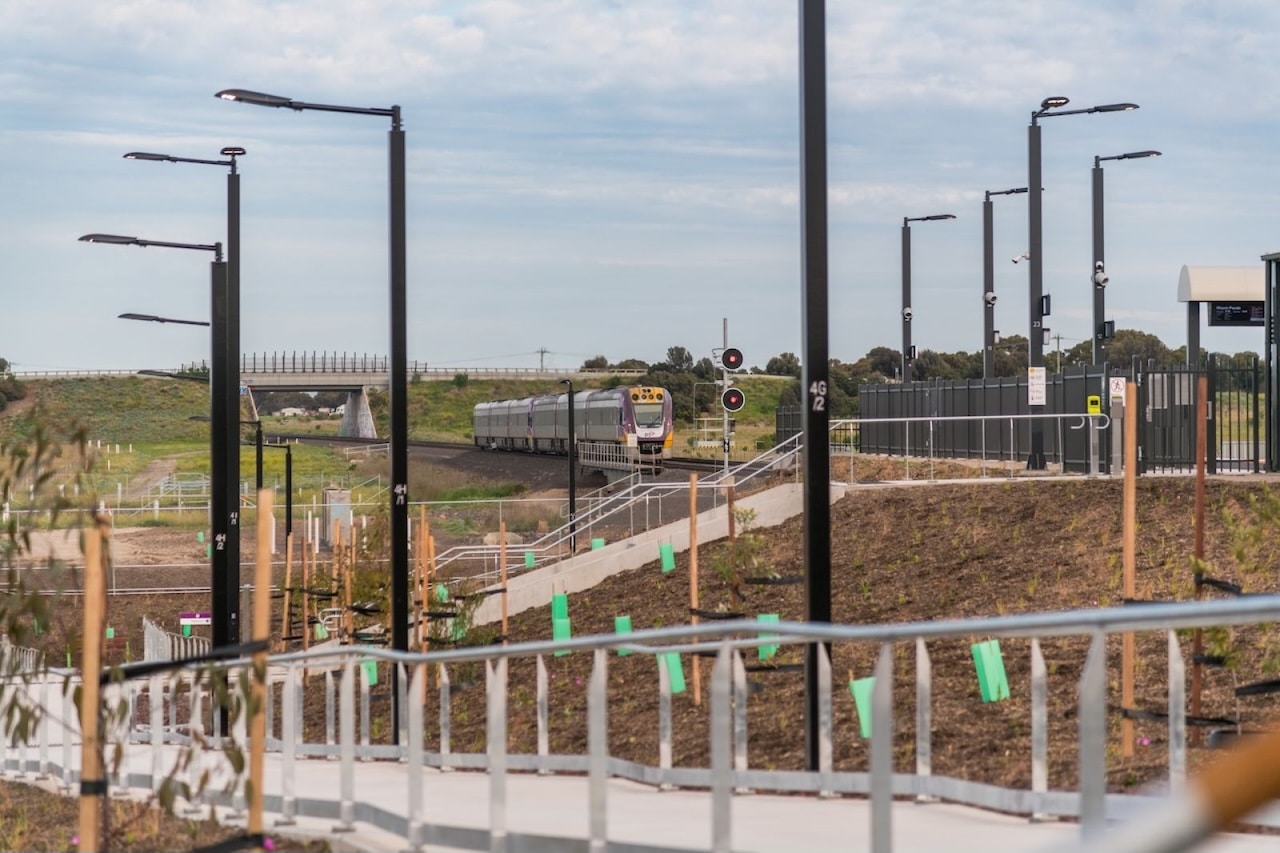
West Tarneit Station, the first brand-new station on Victoria’s rail network in several years, has opened to passengers in Melbourne’s western suburbs to relieve crowding at the existing Tarneit Station. The new stop adds capacity on the Geelong–Melbourne corridor and shortens access distances to rail for rapidly growing greenfield housing areas west of Tarneit. For civil and rail engineers, the project signals ongoing demand for corridor upgrades, additional platforms and turnback options to manage peak loads on this high-growth outer-suburban line.
Technical Brief
- Station design had to integrate with an already high-frequency timetable without adding conflicting train movements.
- Construction required maintaining live rail operations on the corridor, constraining possession windows and work sequencing.
- Drainage and pavement design needed to accommodate large at-grade forecourt and car park catchments on former farmland.
- For similar growth-corridor stations, early corridor safeguarding and passive provision for extra platforms become critical.
Our Take
West Tarneit Station adds to a pattern in Victoria where new suburban rail assets are being paired with grade separations, as seen in the Ruthven Street and Diggers Rest level crossing removals covered in late‑2025 and mid‑2026, which collectively improve network reliability around Melbourne.
In our database of 920 Infrastructure stories, the Victorian Government appears frequently in rail and road interface projects, signalling that new stations like West Tarneit are likely to be integrated with broader corridor upgrades rather than treated as stand‑alone builds.
For Melbourne’s western growth areas, the opening of West Tarneit Station alongside the existing Tarneit Station suggests the state is moving from single‑node park‑and‑ride models towards a denser station spacing that can later support higher service frequencies and bus network restructuring.
Prepared by collating external sources, AI-assisted tools, and Geomechanics.io’s proprietary mining database, then reviewed for technical accuracy & edited by our geotechnical team.
Related Articles


Related Industries & Products
Construction
Quality control software for construction companies with material testing, batch tracking, and compliance management.
Mining
Geotechnical software solutions for mining operations including CMRR analysis, hydrogeological testing, and data management.
QCDB-io
Comprehensive quality control database for manufacturing, tunnelling, and civil construction with UCS testing, PSD analysis, and grout mix design management.