Geomechanics.io

  • Free Tools
Sign UpLog In

Geomechanics.io

Geomechanics, Streamlined.

© 2026 Geomechanics.io. All rights reserved.

Geomechanics.io

CMRR-ioGEODB-ioHYDROGEO-ioQCDB-ioFree Tools & CalculatorsBlogLatest Industry News

Industries

MiningConstructionTunnelling

Company

Terms of UsePrivacy PolicyLinkedIn
    Projects

    US rare earth strategy shift: processing, price floors and risk for project teams

    April 2, 2026|

    Reviewed by Joe Ashwell

    US rare earth strategy shift: processing, price floors and risk for project teams

    First reported on MINING.com

    30 Second Briefing

    US rare earth strategy is shifting from securing ore to controlling processing, with Aclara Resources’ Virginia Tech pilot and planned Louisiana separation plant illustrating a policy pivot towards domestic heavy rare earth separation for dysprosium and terbium used in EVs, wind and defence. Patricio Faúndez, economics leader at GEM Mining Consulting, notes Washington is now deploying price floors, equity stakes and long-term offtakes—tools long associated with China—to de-risk capital-intensive plants. The emerging model favours allied feedstock plus US-based processing, redistributing supply risk across jurisdictions rather than eliminating it.

    Technical Brief

    • Policy tools now include state-backed price floors, equity injections and binding multi-year offtake contracts for plants.
    • Aclara’s US strategy decouples ore mining from separation, importing allied concentrates into domestic circuits.
    • Heavy rare earth separation is framed as the technical bottleneck, not ore discovery or primary beneficiation.
    • US concentrate output is described as “meaningful”, yet largely exported or stranded without local refining capacity.
    • Capital intensity and long construction lead times for separation plants are flagged as key investment risks.
    • Policy shift is explicitly a response to “markets alone” failing to fund resilient rare earth midstream capacity.
    • Supply risk is recast as multi-jurisdictional, with exposure to foreign regulatory, political and social constraints.
    • Rare earths are positioned as a template for more interventionist Western resource policy beyond this commodity class.

    Our Take

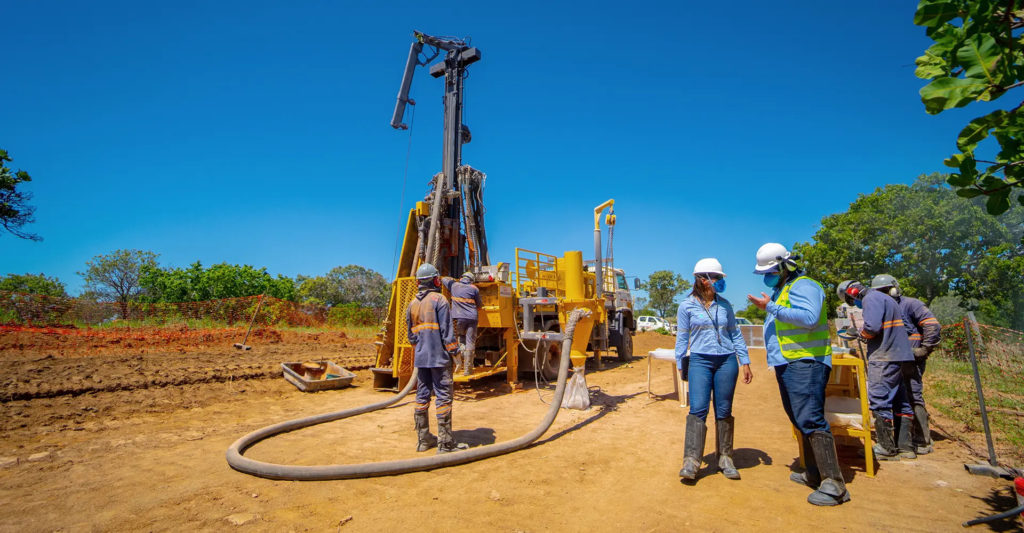
    Aclara Resources’ Carina Module project sits alongside its Virginia Tech pilot plant and planned Port of Vinton, Louisiana facility in our coverage, signalling that any US policy rethink on heavy rare earths such as dysprosium and terbium will directly intersect with Aclara’s emerging processing footprint on US soil.

    Geotechnical Software for Modern Teams

    Centralise site data, logs, and lab results with GEODB-io, CMRR-io, and HYDROGEO-io.

    No credit card required.

    • Save and export unlimited calculations
    • Advanced data visualisation
    • Generate professional PDF reports
    • Cloud storage for all your projects

    Prepared by collating external sources, AI-assisted tools, and Geomechanics.io’s proprietary mining database, then reviewed for technical accuracy & edited by our geotechnical team.

    Related Articles

    Late Payments Bill moves forward: contract and cashflow impacts for UK project teams
    Policy
    about 19 hours ago

    Late Payments Bill moves forward: contract and cashflow impacts for UK project teams

    The UK government is introducing the Small Business Protections Bill (Commercial Payments Bill) to parliament, imposing a statutory 60‑day cap on payment terms for large firms and mandatory interest on late payments to smaller suppliers. The bill grants the Small Business Commissioner new powers to investigate, adjudicate and levy fines worth tens of millions of pounds on persistent late payers. For construction, a planned ban on cash retentions could significantly alter contract structures, cashflow management, and security arrangements for defects and incomplete works.

    DOE order keeps J.H. Campbell coal plant running: grid risk lens for engineers
    Policy
    1 day ago

    DOE order keeps J.H. Campbell coal plant running: grid risk lens for engineers

    US Energy Secretary Chris Wright has issued an emergency order requiring Midcontinent Independent System Operator and Consumers Energy to keep the J.H. Campbell coal-fired plant in West Olive, Michigan available through 16 August 2026 to address critical summer grid reliability risks. The 3-unit plant, originally slated for closure on 31 May 2025, has been run during peak demand and low wind/solar periods and was key in stabilising the grid during recent winter storms. DOE’s Resource Adequacy Report and NERC’s 2025 Long-Term Reliability Assessment both flag MISO as high risk, with DOE warning outage frequency could rise 100-fold by 2030 if firm capacity is retired too quickly.

    Bankable rules for critical minerals: permitting risk lessons from Greenland
    Policy
    1 day ago

    Bankable rules for critical minerals: permitting risk lessons from Greenland

    Greenland’s long-running dispute over Energy Transition Minerals’ Kvanefjeld rare earth and uranium-linked deposit shows that execution risk in permitting and regulatory stability can derail critical-minerals projects as effectively as metallurgy or ore grade. Alina Karpunina of GEM Mining Consulting argues that investors now price in years of legal conflict as a project cost, demanding higher premiums or walking away when uranium thresholds under Greenland’s 2021 law and shifting political signals make approvals look fragile. While projects like Malmbjerg molybdenum, Amitsoq graphite and Tanbreez progress under the 2025–2029 Mineral Resources Strategy and the 2023 EU-Greenland raw-materials partnership, she warns that unclear, revisable rules can render “strategic” deposits effectively unfinanceable.

    Related Industries & Products

    Mining

    Geotechnical software solutions for mining operations including CMRR analysis, hydrogeological testing, and data management.

    Construction

    Quality control software for construction companies with material testing, batch tracking, and compliance management.

    CMRR-io

    Streamline coal mine roof stability assessments with our cloud-based CMRR software featuring automated calculations, multi-scenario analysis, and collaborative workflows.

    HYDROGEO-io

    Comprehensive hydrogeological testing platform for managing, analysing, and reporting on packer tests, lugeon values, and hydraulic conductivity assessments.

    GEODB-io

    Centralised geotechnical data management solution for storing, accessing, and analysing all your site investigation and material testing data.

    AllGeotechnicalInfrastructureHazardsEnvironmental