UK freight: water outperforms rail for 24 years – capacity lessons for engineers
Reviewed by Joe Ashwell
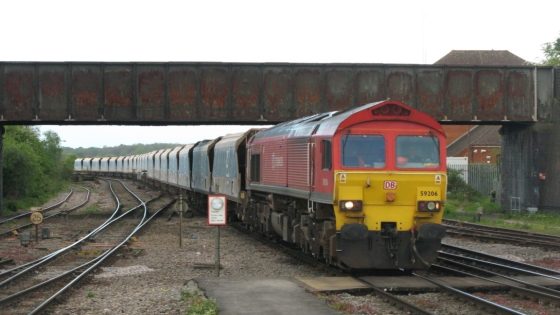
First reported on New Civil Engineer
30 Second Briefing
Freight moved by water has exceeded that carried by rail in the UK for more than 24 consecutive years, according to new data from the Parliamentary Advisory Council for Transport Safety (Pacts). The figures indicate that inland and coastal shipping, including bulk movements through major ports, consistently handle a larger tonne-kilometre share than the national rail freight network. For civil and rail engineers, this trend raises questions over long-term investment priorities in rail freight capacity, intermodal terminals and last‑mile connections versus continued reliance on port and waterway infrastructure.
Technical Brief
- Pacts’ dataset spans more than 24 consecutive years of UK freight movement records.
- Inland and coastal water freight figures explicitly include bulk flows through major UK ports.
- Rail freight in the Pacts analysis is limited to the national network, excluding light rail and metros.
- Tonne-kilometre is the common metric used, allowing direct mode-share comparison between rail and water.
- Findings are intended to inform Parliamentary scrutiny of transport safety and freight policy trade-offs.
Our Take
Within our 918 Infrastructure stories, UK freight coverage is dominated by road and rail capacity debates, so the long-standing dominance of water over rail freight suggests a persistent underutilisation of existing rail corridors for bulk and intermodal flows.
A 24‑year pattern of higher waterborne freight in the United Kingdom implies that port and inland waterway investments have quietly carried more logistics load than many rail schemes, which may influence future cost–benefit cases for rail freight enhancements versus port and coastal shipping upgrades.
Given that this piece sits in our Projects-tagged infrastructure set, the data point strengthens the case for UK scheme promoters to frame new rail freight projects as complementary to, rather than competing with, established water freight routes, especially where mode shift could relieve congested road corridors.
Prepared by collating external sources, AI-assisted tools, and Geomechanics.io’s proprietary mining database, then reviewed for technical accuracy & edited by our geotechnical team.
Related Articles


Related Industries & Products
Construction
Quality control software for construction companies with material testing, batch tracking, and compliance management.
Mining
Geotechnical software solutions for mining operations including CMRR analysis, hydrogeological testing, and data management.
CMRR-io
Streamline coal mine roof stability assessments with our cloud-based CMRR software featuring automated calculations, multi-scenario analysis, and collaborative workflows.
HYDROGEO-io
Comprehensive hydrogeological testing platform for managing, analysing, and reporting on packer tests, lugeon values, and hydraulic conductivity assessments.
GEODB-io
Centralised geotechnical data management solution for storing, accessing, and analysing all your site investigation and material testing data.