Trump leaves Beijing rare earth deal-free: supply risk lens for mine planners
Reviewed by Joe Ashwell
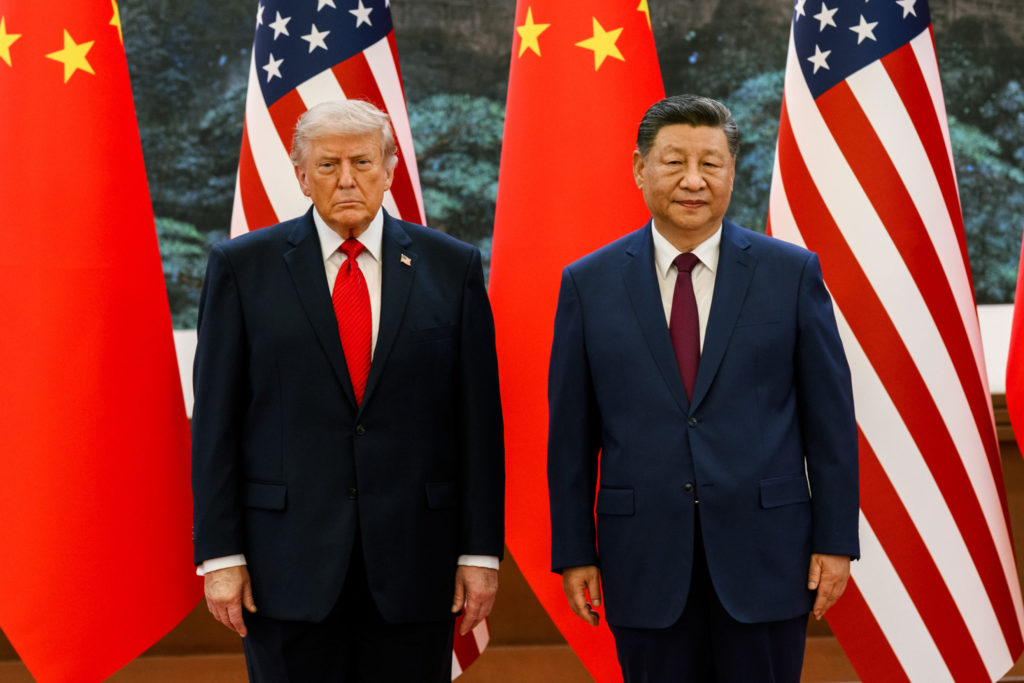
First reported on MINING.com
30 Second Briefing
Trump’s two-day summit in Beijing ended without a rare earths agreement, leaving China’s control of roughly 90% of global refining/processing and over 60% of mined supply unchanged. Export curbs imposed after Trump’s ‘Liberation Day’ tariffs still have teeth, with shipments of yttrium, dysprosium and terbium to the US down about 50% versus pre-control levels, contributing to previous auto plant shutdowns in the US and Europe. US Trade Representative Jamieson Greer reported only a gradual recovery in imports, while analysts warn allies cannot “out-mine or out-process China” quickly enough to build near-term resilience.
Technical Brief
- Beijing’s export restrictions were framed as retaliation for Trump’s ‘Liberation Day’ tariffs, directly linking minerals to tariff policy.
- A one-year trade truce agreed in late October has not normalised rare earth export volumes to the US.
- Customs data specifically cite curtailed exports of yttrium, dysprosium and terbium, all key to high-performance magnets and electronics.
- US Trade Representative Jamieson Greer described import recovery as “better” but explicitly “slower than desired”, implying ongoing supply tightness.
- No clarification was provided on whether Chinese export licensing delays remain a binding constraint on shipment timing and volumes.
- Heidi Crebo-Rediker identified magnet supply chains for military and advanced manufacturing as the structural pressure point, beyond simple ore supply.
- Crebo-Rediker’s assessment is that allies cannot “out-mine, out-process or outspend China” quickly enough for near-term resilience.
- Strategic focus has shifted from tariffs to control of critical minerals and rare earth processing as the primary leverage between the US and China.
Our Take
With China holding about 90% of global rare earth refining capacity, the 50% drop in exports of yttrium, dysprosium and terbium implies downstream users in the US and Europe will likely prioritise recycling, substitution and non-Chinese toll processing in the near term rather than relying on new mine supply alone.
In our database of 1197 Mining stories, rare earth and broader critical minerals pieces remain a smaller subset compared with bulk commodities, suggesting that despite high strategic salience in Washington and Beijing, actual project pipelines for rare earths are still thin relative to policy rhetoric.
Prepared by collating external sources, AI-assisted tools, and Geomechanics.io’s proprietary mining database, then reviewed for technical accuracy & edited by our geotechnical team.
Related Articles

Related Industries & Products
Mining
Geotechnical software solutions for mining operations including CMRR analysis, hydrogeological testing, and data management.
Construction
Quality control software for construction companies with material testing, batch tracking, and compliance management.
CMRR-io
Streamline coal mine roof stability assessments with our cloud-based CMRR software featuring automated calculations, multi-scenario analysis, and collaborative workflows.
QCDB-io
Comprehensive quality control database for manufacturing, tunnelling, and civil construction with UCS testing, PSD analysis, and grout mix design management.
HYDROGEO-io
Comprehensive hydrogeological testing platform for managing, analysing, and reporting on packer tests, lugeon values, and hydraulic conductivity assessments.