Robertson’s £750m UK supercomputer: design and resilience notes for engineers
Reviewed by Tom Sullivan
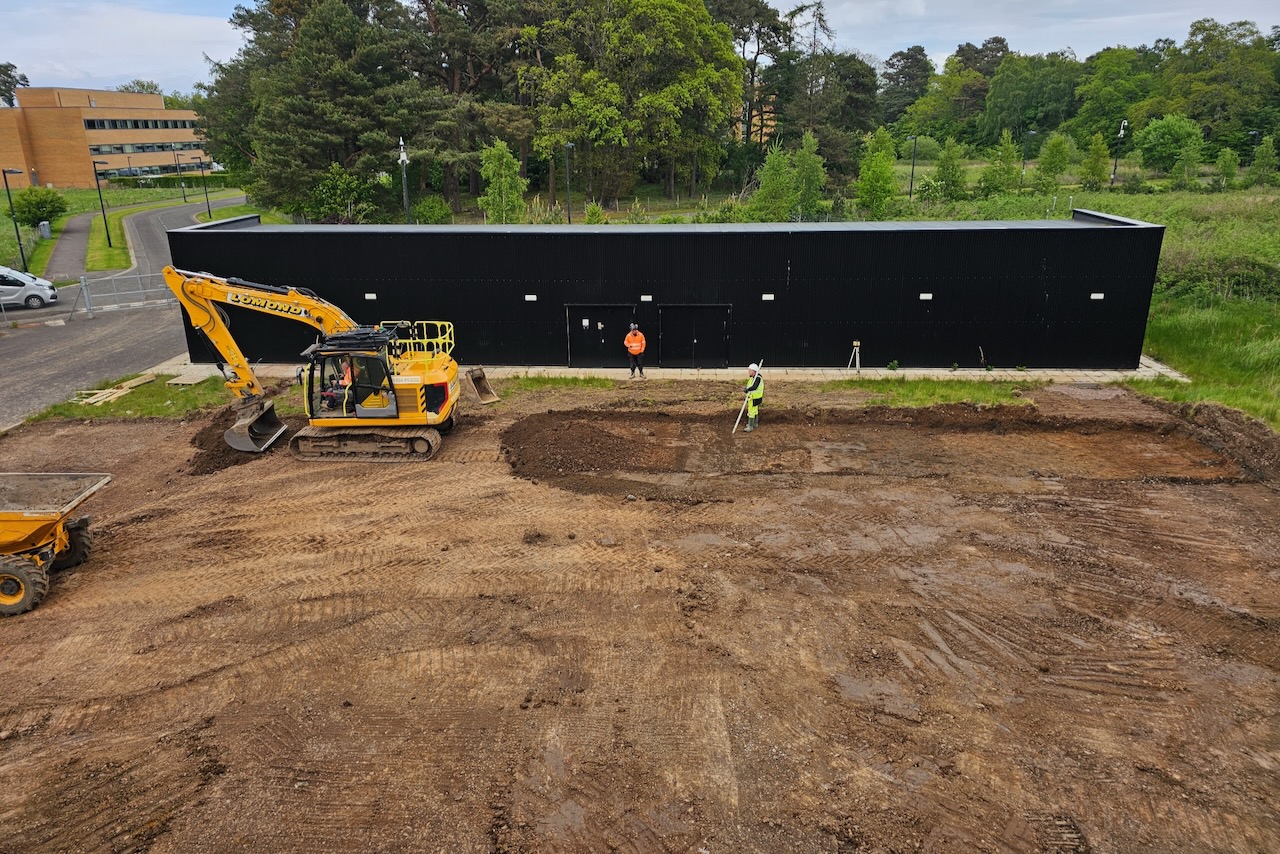
First reported on The Construction Index
30 Second Briefing
Robertson Construction has begun building a £750m national supercomputer facility at the University of Edinburgh, funded by UK Research and Innovation to host the UK’s next-generation high‑performance computing system. The project will require substantial power and cooling infrastructure, including high‑capacity electrical supply, dense server hall fit‑out and advanced mechanical services, placing tight tolerances on structural vibration control and floor loading. Civil and building engineers will need to integrate resilience measures for continuous 24/7 operation, including redundancy in power distribution, chilled water networks and data‑centre‑grade fire protection.
Technical Brief
- Initial enabling works by Robertson Construction include site establishment, temporary works and logistics planning.
- Facility is being delivered within the existing University of Edinburgh estate, constraining footprint and access.
- Integration with university utilities will require staged tie-ins to existing campus electrical and mechanical networks.
- Academic campus setting increases constraints on construction noise, dust, deliveries and working hours.
- Coordination with ongoing university operations will drive phasing of heavy lifts and disruptive activities.
- Proximity to existing research buildings suggests future shared services corridors and inter-building data connectivity.
- Similar national compute hubs are increasingly being co-located with universities to leverage existing infrastructure and skills.
Our Take
The scale of this UK project places it at the upper end of the 870 Infrastructure stories in our coverage, marking a step up from Robertson’s recent £16m–£38m schemes and likely stretching its supply chain, risk management, and digital delivery capabilities.
Robertson Group’s recent return to profit on £793m turnover suggests it has the balance sheet strength to take on a long-duration, high-value public research build, which may position it more strongly for future UK science and healthcare infrastructure frameworks.
Prepared by collating external sources, AI-assisted tools, and Geomechanics.io’s proprietary mining database, then reviewed for technical accuracy & edited by our geotechnical team.
Related Articles


Related Industries & Products
Construction
Quality control software for construction companies with material testing, batch tracking, and compliance management.
Mining
Geotechnical software solutions for mining operations including CMRR analysis, hydrogeological testing, and data management.
QCDB-io
Comprehensive quality control database for manufacturing, tunnelling, and civil construction with UCS testing, PSD analysis, and grout mix design management.