KSM mine delays in Canada: permitting, tunnels and capex lessons for engineers
Reviewed by Tom Sullivan
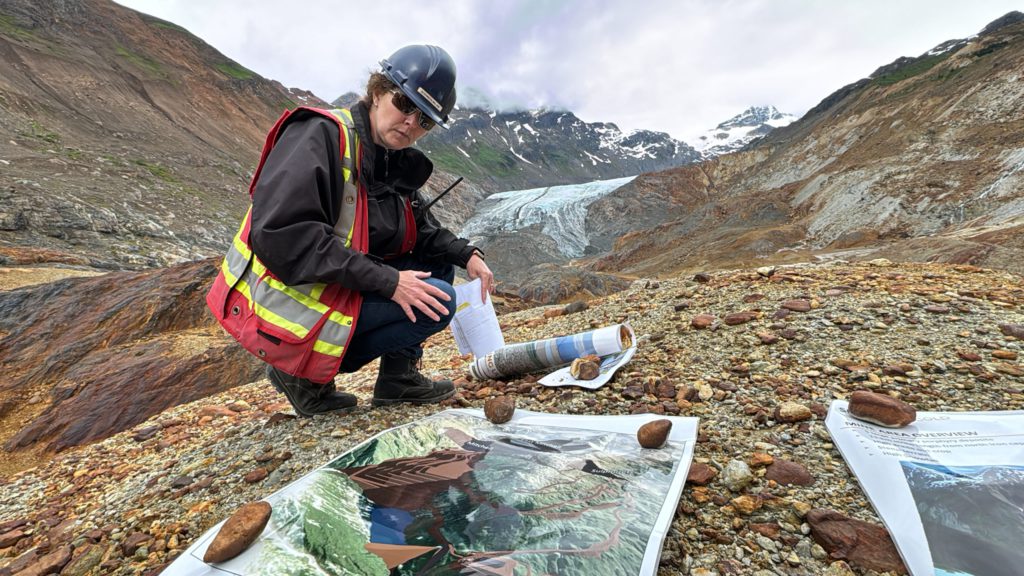
First reported on MINING.com
30 Second Briefing
Seabridge Gold’s C$8.8 billion KSM project in B.C.’s Golden Triangle remains unbuilt 12 years after federal and provincial environmental approvals, despite 2.29 billion tonnes of reserves grading 0.64 g/t gold and 0.14% copper, as a 12.5 km Mitchell Treaty Tunnel segment crosses Tudor Gold’s Treaty Creek mineral claims. The province has invested C$1.2 billion in early works at KSM and designated it a priority, while Tudor advances a PEA on the 912.3 million tonne Goldstorm deposit (0.85 g/t Au, 5.07 g/t Ag, 0.15% Cu). Parallel federal reforms, including proposed one-year review timelines and ministerial approvals for fish-bearing tailings impoundments and Navigable Waters permits, aim to cut years from major mine permitting but leave DRIPA-related Indigenous rights risks unresolved.
Technical Brief
- Mitchell Treaty Tunnel permitting is stalled because 12.5 km of alignment overlies Tudor Gold’s Treaty Creek mineral claims.
- BC has issued six major mine permits in the last 12 months, including Eskay Creek and Highland Valley Copper’s extension.
- Eskay Creek’s brownfield redevelopment is about 50% built, targeting first production in Q2 next year.
- Seabridge has already spent C$1.2 billion on KSM early works, including C$650 million since 2021 on access roads, camps, a switching station, bridge and fish habitat compensation.
- Planned 2026 KSM spend is C$190 million, supporting roughly 400 on-site jobs during early works.
- BC’s 18 operating mines and two smelters generated C$27.8 billion output and 56,237 jobs in 2024.
- A “typical” new BC mine is estimated to add C$2.6 billion during construction and C$27.7 billion over its operating life.
- Gitxaała court ruling forces BC to redesign mineral claims processes to incorporate DRIPA-based First Nations consultation, adding legal uncertainty to tenure security.
- Federal proposals would convert Cabinet-level decisions on fish-bearing tailings impoundments and Navigable Waters permits to ministerial sign-off, potentially removing years from some project schedules.
Our Take
The Mansfield Consulting figures cited for B.C. (18 operating mines generating C$27.8 billion in output versus C$27.7 billion lifetime output for an ‘average’ new mine) imply that a single large copper–gold project such as KSM could shift provincial mining GDP noticeably, which in turn gives both the province and Ottawa leverage to demand higher standards on consultation and environmental performance.
Prepared by collating external sources, AI-assisted tools, and Geomechanics.io’s proprietary mining database, then reviewed for technical accuracy & edited by our geotechnical team.
Related Articles
Related Industries & Products
Mining
Geotechnical software solutions for mining operations including CMRR analysis, hydrogeological testing, and data management.
Construction
Quality control software for construction companies with material testing, batch tracking, and compliance management.
CMRR-io
Streamline coal mine roof stability assessments with our cloud-based CMRR software featuring automated calculations, multi-scenario analysis, and collaborative workflows.
HYDROGEO-io
Comprehensive hydrogeological testing platform for managing, analysing, and reporting on packer tests, lugeon values, and hydraulic conductivity assessments.
GEODB-io
Centralised geotechnical data management solution for storing, accessing, and analysing all your site investigation and material testing data.