Geomechanics.io

  • Free Tools
Sign UpLog In

Geomechanics.io

Geomechanics, Streamlined.

© 2026 Geomechanics.io. All rights reserved.

Geomechanics.io

CMRR-ioGEODB-ioHYDROGEO-ioQCDB-ioFree Tools & CalculatorsBlogLatest Industry News

Industries

MiningConstructionTunnelling

Company

Terms of UsePrivacy PolicyLinkedIn
    Projects

    Glencore’s Cerrejón restart: blockade risks and planning notes for mine engineers

    June 3, 2026|

    Reviewed by Joe Ashwell

    Glencore’s Cerrejón restart: blockade risks and planning notes for mine engineers

    First reported on MINING.com

    30 Second Briefing

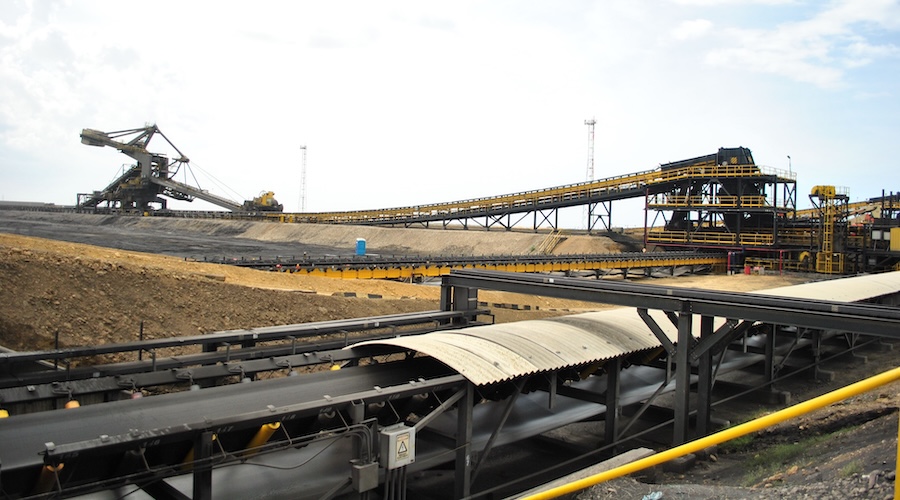
    Glencore’s Cerrejón coal complex in La Guajira, Colombia has restarted after a 10‑day rail blockade to Port Bolivar forced a full shutdown and force majeure, with operations resuming at 18:00 on 2 June once critical supplies were restored. The mine has already faced nearly 80 blockades this year and recorded 333 in 2024—equating to 135 lost operating days—contributing to a 12% year‑on‑year drop in 2024 output to 16.8 Mt and plans to cut a further 5–10 Mt/y amid Atlantic market oversupply. Persistent community‑driven rail disruptions and uncertainty over a temporary 1% export tax are now central design and risk factors for mine planning, logistics resilience and investment decisions across Colombia’s coal sector.

    Technical Brief

    • Port Bolivar is Cerrejón’s sole export outlet, so any rail disruption immediately severs all seaborne shipments.
    • Force majeure was lifted and restart initiated precisely at 18:00 on 2 June, once critical inventories recovered.
    • The 10‑day blockade specifically choked inbound deliveries required for both mine production and port export operations.
    • Cerrejón is described as one of the world’s largest open‑pit coal mines and a key Atlantic supplier.
    • In 2023, 201 blockades plus nine terrorist attacks halted coal transport for a cumulative 95 days.
    • By contrast, 333 blockades in 2024 translated into 135 days of interrupted operations, indicating escalation in frequency and duration.
    • Company statements emphasise staged reactivation with explicit safety conditions for personnel, environment and operating assets.
    • Despite election‑driven optimism on resource policy, unresolved community‑infrastructure disputes along the rail corridor remain a dominant operational risk driver.

    Our Take

    Colombia’s push for detailed closure and transition planning at the Cerrejón complex, noted in the 19 May article, means repeated rail blockades in La Guajira are likely to strengthen arguments in Bogotá for accelerating the wind‑down of thermal coal in favour of other commodities such as copper and lithium mentioned in current policy debates.

    With 135 days of interrupted operations in 2024 and a planned 5–10 Mt annual output reduction at Cerrejón, Glencore’s Colombian coal exposure is becoming structurally less reliable, which may increase the strategic value of its copper and critical minerals positions highlighted in other recent Glencore‑tagged coverage.

    Geotechnical Software for Modern Teams

    Centralise site data, logs, and lab results with GEODB-io, CMRR-io, and HYDROGEO-io.

    No credit card required.

    • Save and export unlimited calculations
    • Advanced data visualisation
    • Generate professional PDF reports
    • Cloud storage for all your projects

    Prepared by collating external sources, AI-assisted tools, and Geomechanics.io’s proprietary mining database, then reviewed for technical accuracy & edited by our geotechnical team.

    Related Articles

    Deep Sea Minerals’ NOAA compliance: project and risk takeaways for mine planners
    Mining
    about 2 hours ago

    Deep Sea Minerals’ NOAA compliance: project and risk takeaways for mine planners

    Deep Sea Minerals has secured a “substantial compliance” determination from NOAA under the US Deep Seabed Hard Mineral Resources Act, advancing its application to explore polymetallic nodules in international waters. The proposed concession covers about 150,000 km² of the Pacific Ocean, targeting nodules containing nickel, cobalt, copper and manganese for electrification, energy and defence supply chains. The company says this makes it one of only three publicly traded or public-market pathway firms to reach this stage in NOAA’s DSHMRA regulatory process, as the agency moves to accelerate licence reviews.

    Stardust Power DOE lithium extraction programme: process and feedstock notes for engineers
    Mining
    about 2 hours ago

    Stardust Power DOE lithium extraction programme: process and feedstock notes for engineers

    Stardust Power Inc. has been selected as the end-use industrial partner in a US Department of Energy-funded programme led by Ohio University’s Institute for Sustainable Energy and the Environment and CONSOL Innovations to develop electrochemical technology for direct lithium extraction from domestic waste streams, including oil and gas wastewater and legacy coal mine drainage. Under FOA DE-FOA-0003105, the team will test coal- and waste coal-based electrodes, with Stardust Power evaluating lithium product against battery-grade specifications and assessing refinery integration. The move supports diversified US lithium feedstocks and strengthens domestic critical minerals processing capacity.

    Cornish Tin & Lithium Tregonning drilling: resource and grade insights for mine planners
    Mining
    about 4 hours ago

    Cornish Tin & Lithium Tregonning drilling: resource and grade insights for mine planners

    Cornish Tin & Lithium’s Phase 3 drilling at the Tregonning project in West Cornwall has extended the lithium-bearing Newall Formation to a strike length of about 3.27 km from Tregonning North to Tregonning South, with multiple lithium-enriched aplite‑pegmatite sheets at varying depths. Earlier intersections at Tregonning North included 0.3 m grading 1.33% Li₂O, with a peak of 1.42% Li₂O, and the new work suggests a materially larger lithium inventory. Drilling at Tregonning South also defined a new tin system with at least ten lodes, returning up to 2.69% Sn in Norcross No.1, 1.26% Sn in Rib North and 1.68% Sn in Rib South.

    Related Industries & Products

    Mining

    Geotechnical software solutions for mining operations including CMRR analysis, hydrogeological testing, and data management.

    Construction

    Quality control software for construction companies with material testing, batch tracking, and compliance management.

    CMRR-io

    Streamline coal mine roof stability assessments with our cloud-based CMRR software featuring automated calculations, multi-scenario analysis, and collaborative workflows.

    HYDROGEO-io

    Comprehensive hydrogeological testing platform for managing, analysing, and reporting on packer tests, lugeon values, and hydraulic conductivity assessments.

    GEODB-io

    Centralised geotechnical data management solution for storing, accessing, and analysing all your site investigation and material testing data.

    AllGeotechnicalInfrastructureHazardsEnvironmental