Eaves Tunnel track upgrade: geometry, drainage and access lessons for engineers
Reviewed by Joe Ashwell
First reported on New Civil Engineer
30 Second Briefing
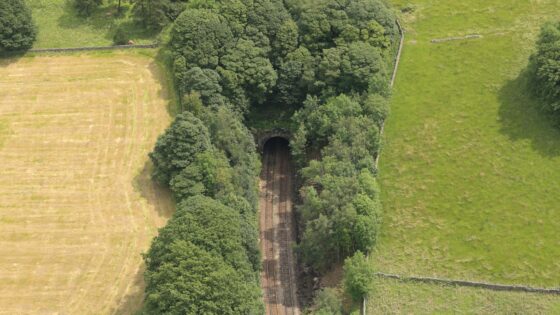
A £1.5M Network Rail project will upgrade 400m of track through the 163-year-old Eaves Tunnel in Buxton during the last weekend of September. Works will focus on replacing life-expired rail and ballast within the single-bore tunnel, improving track geometry and drainage performance on this constrained section. Possession over one weekend suggests intensive access planning, with knock-on implications for track-bed condition monitoring and future maintenance intervals on similar Victorian tunnel assets.
Technical Brief
- Single-bore Victorian tunnel geometry will restrict plant size, likely forcing use of rail-mounted or mini excavators.
- 163-year-old masonry lining implies careful vibration management and tight limits on dynamic tamping energy.
- Heritage status and age will drive pre- and post-works condition surveys of lining, invert and drainage outfalls.
- Access via a single-track formation means materials logistics must be sequenced as train-borne in/out only.
- Short possession window demands pre-assembled rail panels and pre-batched ballast stockpiles near tunnel portals.
- Interface risk with existing signalling, bonding and track circuits in the tunnel will require detailed isolation planning.
- Lessons on rapid renewals in constrained Victorian bores will be directly applicable to other legacy tunnels.
Our Take
Network Rail’s work at Eaves Tunnel fits a pattern in our recent infrastructure coverage where the operator is tackling life‑expired assets on constrained rail corridors, as seen in the Reedham swing bridge bearing repairs and the Chiltern Main Line upgrade scheduled the same month.
With 400m of track being renewed in a single late‑September possession, this job aligns with other Network Rail pieces in our database where short, high‑intensity blockades are used to clear backlogs on ageing structures, minimising disruption while incrementally upgrading Victorian‑era assets.
Prepared by collating external sources, AI-assisted tools, and Geomechanics.io’s proprietary mining database, then reviewed for technical accuracy & edited by our geotechnical team.
Related Articles


Related Industries & Products
Mining
Geotechnical software solutions for mining operations including CMRR analysis, hydrogeological testing, and data management.
Construction
Quality control software for construction companies with material testing, batch tracking, and compliance management.
CMRR-io
Streamline coal mine roof stability assessments with our cloud-based CMRR software featuring automated calculations, multi-scenario analysis, and collaborative workflows.
HYDROGEO-io
Comprehensive hydrogeological testing platform for managing, analysing, and reporting on packer tests, lugeon values, and hydraulic conductivity assessments.
GEODB-io
Centralised geotechnical data management solution for storing, accessing, and analysing all your site investigation and material testing data.