Geomechanics.io

  • Free Tools
Sign UpLog In
Built byBoxcut Studio

Geomechanics.io

Geomechanics, Streamlined.

© 2026 Geomechanics.io. All rights reserved.

Geomechanics.io

CMRR-ioGEODB-ioHYDROGEO-ioQCDB-ioFree Tools & CalculatorsBlogLatest Industry News

Industries

MiningConstructionTunnelling

Company

Terms of UsePrivacy PolicyLinkedIn
    Projects

    Delta Lithium’s new Yinnetharra targets: drill-planning notes for geologists

    October 1, 2026|

    Reviewed by Tom Sullivan

    Delta Lithium’s new Yinnetharra targets: drill-planning notes for geologists

    First reported on Australian Mining

    30 Second Briefing

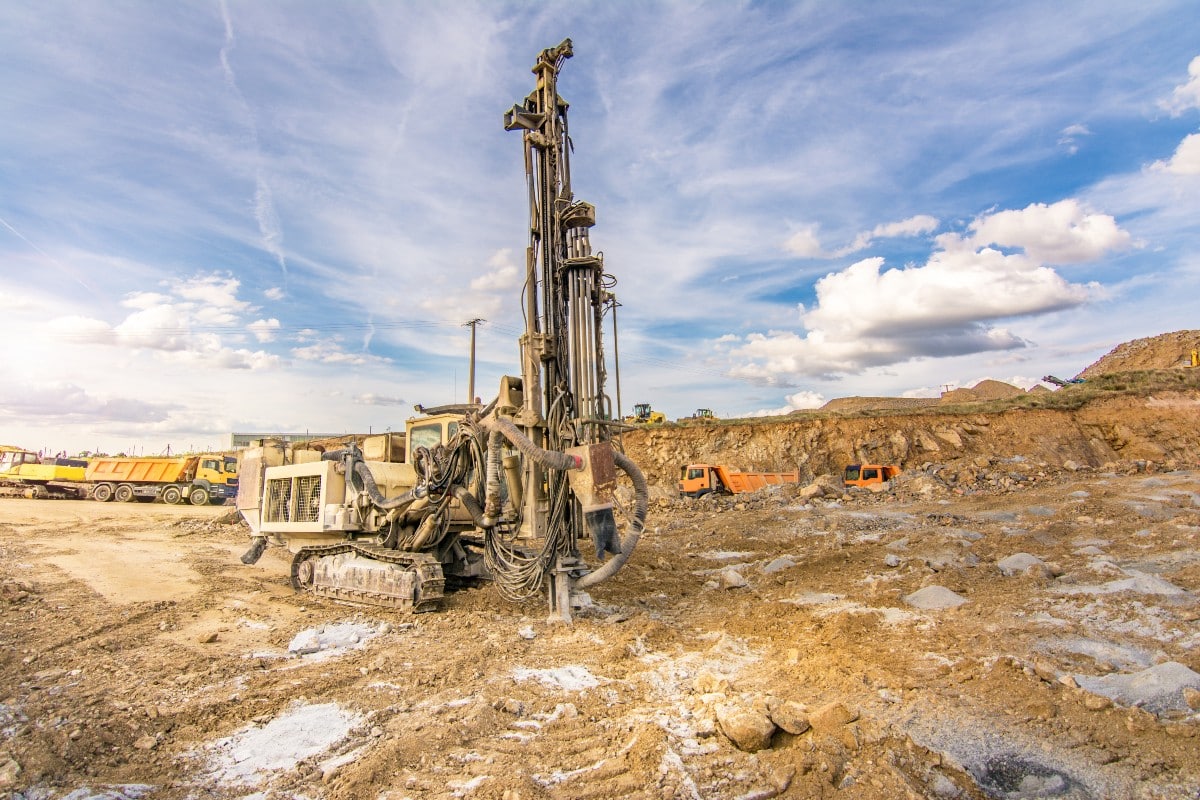
    Delta Lithium is preparing to drill six new reconnaissance lithium targets across its 2325km² Yinnetharra tenure in Western Australia, following surface mapping and geochemical sampling. The company plans first-pass drilling in Q4 2026 while ongoing work at the nearby Mt Ida project continues to refine the pegmatite geometry and broader geological model. For geologists and drill planners, the expanded target pipeline signals a shift from regional geochem to drill-ready prospects, with potential for multiple spodumene-bearing pegmatite corridors if early holes confirm continuity.

    Technical Brief

    • Yinnetharra tenure spans 2325km², implying wide spacing and logistics planning for early-stage access tracks.
    • Six reconnaissance targets were generated directly from surface mapping and geochemical anomalies, not legacy drilling.
    • Delta Lithium is running Yinnetharra exploration in parallel with resource-definition drilling at Mt Ida.
    • Ongoing Mt Ida drilling is being used to refine pegmatite geometry and structural controls regionally.
    • Geological learnings from Mt Ida are expected to calibrate pegmatite targeting criteria applied at Yinnetharra.
    • For similar greenfields lithium belts, this sequencing shows how surface geochem can rapidly feed a drill pipeline.

    Our Take

    With 2325km² of Yinnetharra tenure and six reconnaissance targets, Delta Lithium is moving into the scale bracket where systematic targeting, remote sensing and AI-supported prospectivity tools (highlighted in our August 27 piece on integrated digital ecosystems in Australian mining) can materially shorten discovery timelines.

    Fourth-quarter drilling at Yinnetharra in Western Australia lines up with the exploration financing window that Australian mining bodies have been lobbying to support via extended CGT concessions for juniors (covered in our September 14 article), which could influence how Delta Lithium structures future capital raising for this pipeline.

    Geotechnical Software for Modern Teams

    Centralise site data, logs, and lab results with GEODB-io, CMRR-io, and HYDROGEO-io.

    No credit card required.

    • Save and export unlimited calculations
    • Advanced data visualisation
    • Generate professional PDF reports
    • Cloud storage for all your projects

    Prepared by collating external sources, AI-assisted tools, and Geomechanics.io’s proprietary mining database, then reviewed for technical accuracy & edited by our geotechnical team.

    Related Articles

    Mining
    about 2 hours ago

    Epiroc ET55 drill string: design, wear and energy-transfer notes for mine engineers

    Epiroc has launched the ET55 drill string, replacing the long‑running ST58 system and extending its ET next‑generation family with a fully shoulder‑drive connection from top hammer to bit. The ET55 applies the same design principles as earlier ET systems, using a shoulder drive interface along the entire string to improve energy transfer and reduce thread wear compared with conventional threaded couplings. For mine operators running top‑hammer production drilling, the unified shoulder drive geometry should simplify string configuration and potentially extend service life in abrasive ground.

    Mining
    about 2 hours ago

    Redpath on Africa’s mining future: capability, data and safety notes for engineers

    Redpath Africa Operations Executive Pieter Oosthuysen argues that Africa’s mining growth depends on building local technical capability and systems, not just sinking new shafts into high-grade orebodies. He points to integrating digital mine planning tools with mechanised development fleets and rigorous safety management to lift productivity in deep, labour-intensive operations common across the continent. For geotechnical and mining teams, the message is a shift towards long-term skills development, data-driven decision-making and closer OEM–contractor collaboration on complex underground projects.

    Mining
    about 2 hours ago

    Dyno Nobel autonomous blasthole system: design and safety notes for mine engineers

    Dyno Nobel has prototyped a fully autonomous, end-to-end blasthole inspection and loading system that removes personnel from the drill and blast bench, one of mining’s last highly manual and safety‑critical activities. Developed over five years of intensive R&D and unveiled to investors in New York, the technology autonomously orchestrates hole condition inspection, explosives loading and initiation sequencing. For mine operators, this points to tighter control of powder factors and timing, more consistent bench conditions, and reduced exposure of crews around loaded patterns.

    Related Industries & Products

    Mining

    Geotechnical software solutions for mining operations including CMRR analysis, hydrogeological testing, and data management.

    CMRR-io

    Streamline coal mine roof stability assessments with our cloud-based CMRR software featuring automated calculations, multi-scenario analysis, and collaborative workflows.

    HYDROGEO-io

    Comprehensive hydrogeological testing platform for managing, analysing, and reporting on packer tests, lugeon values, and hydraulic conductivity assessments.

    GEODB-io

    Centralised geotechnical data management solution for storing, accessing, and analysing all your site investigation and material testing data.

    AllGeotechnicalInfrastructureHazardsEnvironmental