Copper surplus, $332B mine shortfall: project pipeline risks for engineers
Reviewed by Tom Sullivan
First reported on MINING.com
30 Second Briefing
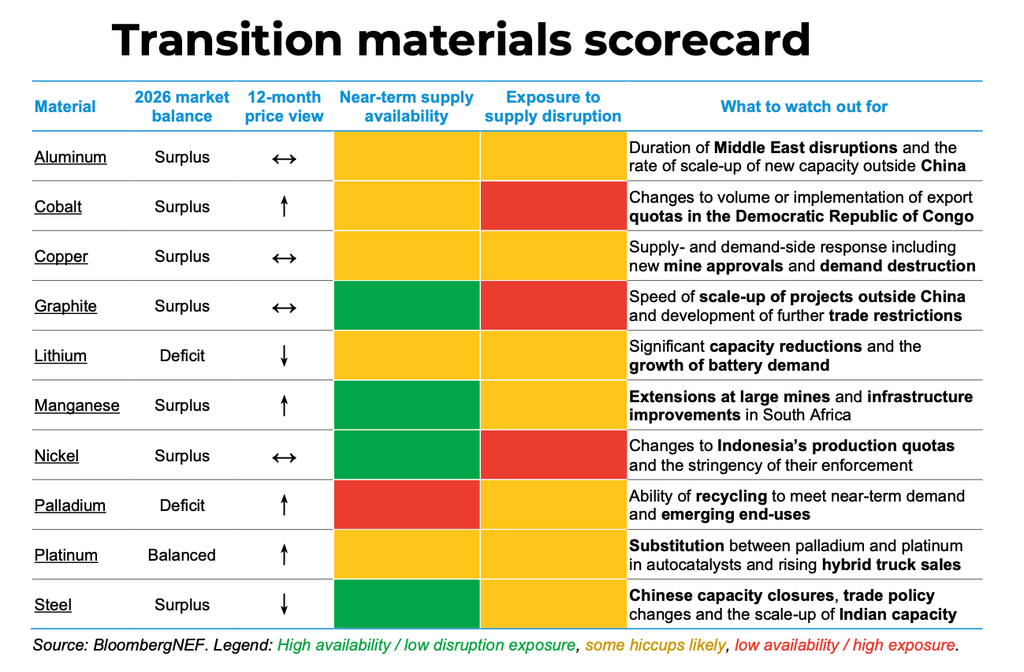
Global copper markets face a structural mine shortfall despite an ICSG-forecast refined surplus of 368,000 tonnes in 2027, with BloombergNEF estimating a $332 billion investment is needed in new projects to avoid supply deficits from 2028. BNEF projects demand rising 61% between 2026 and 2050 to nearly 46 million tonnes, leaving a potential 20‑million‑tonne gap (44% of demand), driven heavily by a 244% jump in electrified transport copper use to 11.4 million tonnes. New copper mines currently average 17 years from discovery to production, compounding grade decline, permitting and financing constraints.
Technical Brief
- ICSG’s 2027 refined surplus of 368,000 tonnes is contrasted with BNEF’s long-run mined supply deficit view.
- BNEF projects a 3‑million‑tonne mined copper shortfall by 2035, equivalent to 8% of forecast consumption.
- Demand to 2035 is modelled to grow 34%, driven by vehicles, Li‑ion batteries, wiring and data centres.
- Electrified transport copper use is forecast at 11.4 million tonnes in 2050, a 244% increase from today.
- New copper projects are assumed to require 17 years from discovery to first production, constraining response speed.
- Declining ore grades and under‑investment in exploration are identified as the two primary mine‑supply bottlenecks.
- Of 10 transition materials assessed, only copper lacks sufficient long‑term production capacity in BNEF’s outlook.
- Eight of the 10 materials have over 50% of global refining capacity in a single country, mainly China.
- BNEF notes that expanding mine output alone will not deliver diversified refining; separate processing investment is required.
Our Take
With an average 17‑year lead time for new copper mines, the projected 2028 onset of shortages implies that only projects already in, or very near, construction in regions like Latin America and Africa will materially affect the 2035 balance, putting late‑stage brownfield expansions at assets such as Codelco’s Gabriela Mistral at a premium versus greenfield plays.
The World Bank Group’s $1.4 billion in MIGA‑backed guarantees for Codelco, noted in our recent coverage, signals that multilateral lenders are already positioning to underwrite long‑life copper supply in Chile ahead of the forecast 3 Mt deficit by 2035, which could lower financing costs for similar Tier‑1 copper developments in South America and Africa.
BNEF’s finding that 7 of 10 key materials (including copper, cobalt, lithium and graphite) have China‑dominant refining capacity means that any 20 Mt copper deficit by 2050 is likely to amplify concentration risk in midstream processing, pushing operators in Australia, Canada and the USA to justify capex not just on mine supply but on domestic or allied‑market refining to secure offtake.
Prepared by collating external sources, AI-assisted tools, and Geomechanics.io’s proprietary mining database, then reviewed for technical accuracy & edited by our geotechnical team.
Related Articles
Related Industries & Products
Mining
Geotechnical software solutions for mining operations including CMRR analysis, hydrogeological testing, and data management.
Construction
Quality control software for construction companies with material testing, batch tracking, and compliance management.
CMRR-io
Streamline coal mine roof stability assessments with our cloud-based CMRR software featuring automated calculations, multi-scenario analysis, and collaborative workflows.
HYDROGEO-io
Comprehensive hydrogeological testing platform for managing, analysing, and reporting on packer tests, lugeon values, and hydraulic conductivity assessments.
GEODB-io
Centralised geotechnical data management solution for storing, accessing, and analysing all your site investigation and material testing data.