Copper price run and Sprott squeeze warning: key signals for mine planners
Reviewed by Tom Sullivan
First reported on MINING.com
30 Second Briefing
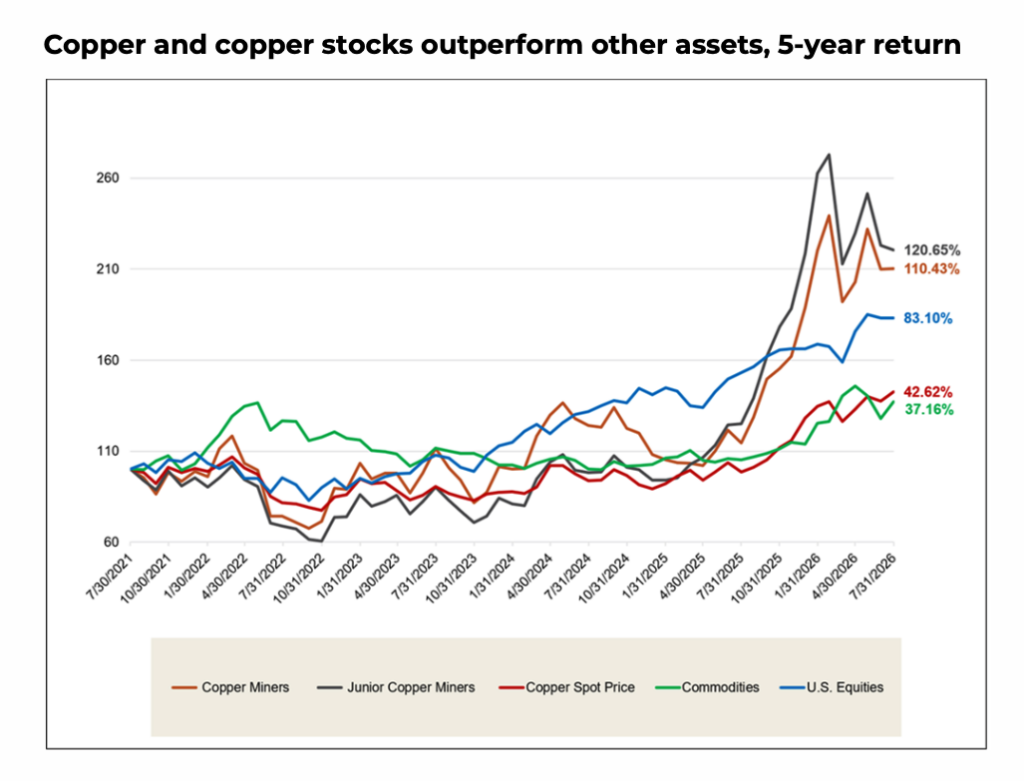
Copper’s roughly 50% price surge over the past year to about $14,545 per tonne signals a structural squeeze as mine underperformance, collapsing treatment charges and tariff-driven trade distortions collide with rising demand from power grids, AI data centres and defence systems, Sprott analyst Jacob White says. Spot TC/RCs have flipped from more than $90 per tonne in late 2023 to below minus $150, with Antofagasta and BHP increasingly pricing concentrate off spot indexes as smelters bid aggressively despite negative terms, supported by sulphuric acid and precious metal by-product revenues. Chile’s downgraded 2026 output outlook, persistent disruptions at Grasberg and Kamoa-Kakula, and US proposals for 15–30% Section 232 tariffs on refined copper, plus a separate 50% levy on semis, point to prolonged tightness and unusually strong margins for pure-play copper miners.
Technical Brief
- Spot TC/RCs have swung more than $240/t, from >$90/t in late 2023 to below –$150.
- Antofagasta has abandoned traditional fixed mid‑year terms, instead selling copper concentrate against spot indices.
- BHP is similarly indexing substantial concentrate volumes to spot, reinforcing miners’ pricing leverage over smelters.
- Smelter profitability is being propped up by sulphuric acid, gold and silver by‑product credits despite negative TC/RCs.
- Middle Eastern sulphur trade disruption and China’s sulphuric acid export suspension have tightened acid supply and raised prices.
- Acid‑dependent SX–EW operations face higher reagent costs, while integrated smelters benefit from stronger acid by‑product revenues.
- More than 200,000 t of refined copper landed at US ports in July, the highest since at least 2014.
- Available LME inventories have fallen sharply, with nearby contracts moving deeper into backwardation for prompt metal access.
- Chile now forecasts national copper output will decline in 2026 after weaker‑than‑expected first‑half production.
- Mine disruptions in 2024–25 exceeded long‑term averages, with slower‑than‑planned recoveries at Grasberg and Kamoa‑Kakula already baked into supply forecasts.
Our Take
Sprott Asset Management has been a recurring commentator in our database on structurally tight fuel and metals markets, with recent uranium and rare earth notes framing AI-driven power demand as a long‑duration load; the current copper squeeze call fits that same thesis of underbuilt supply against new electrification and data‑centre demand.
The mention of BHP and Antofagasta in this copper piece aligns with their appearance in recent coverage around critical materials and SMR‑linked supply chains, suggesting that diversified majors with strong Latin American and Australian copper positions are likely to be favoured by investors positioning for the tariff and permitting risks highlighted here.
With copper and sulphuric acid both tagged in this article and across 288 keyword‑matched pieces in our database, the sharp reversal in treatment charges implies sustained pressure on smelter margins, which in turn can delay expansions in regions like Chile and the DRC and tighten the availability of by‑product gold and silver from large porphyry systems such as Grasberg and Kamoa‑Kakula.
Prepared by collating external sources, AI-assisted tools, and Geomechanics.io’s proprietary mining database, then reviewed for technical accuracy & edited by our geotechnical team.
Related Articles


Related Industries & Products
Mining
Geotechnical software solutions for mining operations including CMRR analysis, hydrogeological testing, and data management.
CMRR-io
Streamline coal mine roof stability assessments with our cloud-based CMRR software featuring automated calculations, multi-scenario analysis, and collaborative workflows.
HYDROGEO-io
Comprehensive hydrogeological testing platform for managing, analysing, and reporting on packer tests, lugeon values, and hydraulic conductivity assessments.
GEODB-io
Centralised geotechnical data management solution for storing, accessing, and analysing all your site investigation and material testing data.