Copper, nickel prices could double by 2035: project pipeline risks for mine planners
Reviewed by Tom Sullivan
First reported on MINING.com
30 Second Briefing
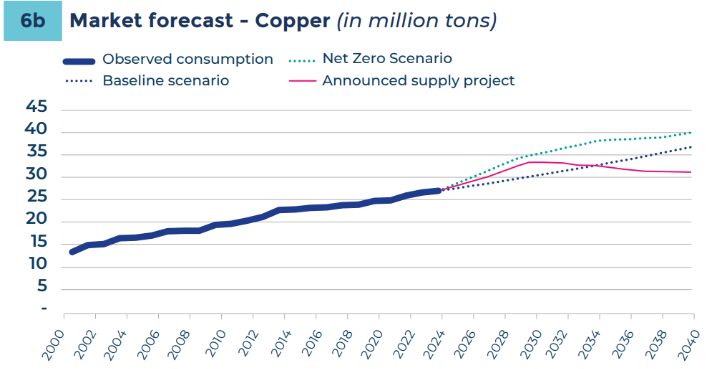
Copper and nickel prices could double by 2035 as Coface projects structural supply deficits of around 10% of demand for aluminium, copper and nickel, with refined copper shortfalls potentially rising from 1.5 million to 6.5 million tonnes and nickel facing deficits of up to 35% under a net-zero scenario. The report models supply growth of only 1% per year for copper, 1.5% for nickel and 0.4% for aluminium against demand growth of 1.8–4.5%, driven by EVs, grid expansion, data centres and battery storage. For project developers and offtakers, 15–20 year permitting and development timelines, 1,138 active mineral trade restrictions and US tariffs imply sustained input-cost pressure and greater value capture in refining and processing rather than extraction.
Technical Brief
- Coface identifies 1,138 mineral import/export restrictions in force, up from 357 a decade ago.
- US tariff measures introduced over the past year are singled out as further tightening metals trade.
- Clean-energy technologies alone could consume ~35% of global copper and nickel demand by 2035.
- Refined copper shortfall is projected to rise from 1.5 Mt to 6.5 Mt by 2035.
- Under a net-zero pathway, refined nickel could face a deficit approaching 35% of projected demand.
- Aluminium deficit is estimated at 5–15 Mt, driven mainly by industrial and energy constraints, not ore scarcity.
- Coface notes project processing times of 15–20 years from discovery to production as a key bottleneck.
- Value capture is assessed as shifting towards refining and processing, with weaker incentives for mine capacity expansion.
Our Take
In our database of 1266 Mining stories, only a handful quantify metal market deficits as explicitly as this piece, so the projected 11–17% refined copper and 35% refined nickel shortfalls by 2035 are at the more extreme end of scenario work and imply sustained price support even if some new capacity slips in late.
Processing times of 15–20 years for new copper and nickel projects mean that existing operations such as Panoramic Resources’ Savannah nickel-copper-cobalt mine and North American brownfield sites in the USA and Canada are likely to capture a disproportionate share of the upside from any London Metal Exchange price strength over the 2030s.
The combination of a 10% average supply deficit for aluminium, copper and nickel and rising trade restrictions on minerals suggests downstream assets like the strategic graphite processing plant in Alabama could become strategic chokepoints, giving US-based processors leverage in offtake and tolling negotiations with OEMs pursuing net-zero targets.
Prepared by collating external sources, AI-assisted tools, and Geomechanics.io’s proprietary mining database, then reviewed for technical accuracy & edited by our geotechnical team.
Related Articles


Related Industries & Products
Mining
Geotechnical software solutions for mining operations including CMRR analysis, hydrogeological testing, and data management.
CMRR-io
Streamline coal mine roof stability assessments with our cloud-based CMRR software featuring automated calculations, multi-scenario analysis, and collaborative workflows.
HYDROGEO-io
Comprehensive hydrogeological testing platform for managing, analysing, and reporting on packer tests, lugeon values, and hydraulic conductivity assessments.
GEODB-io
Centralised geotechnical data management solution for storing, accessing, and analysing all your site investigation and material testing data.