Geomechanics.io

  • Free Tools
Sign UpLog In

    Geomechanics.io

    Geomechanics, Streamlined.

    © 2026 Geomechanics.io. All rights reserved.

    Geomechanics.io

    CMRR-ioGEODB-ioHYDROGEO-ioQCDB-ioFree Tools & CalculatorsBlogLatest Industry News

    Industries

    MiningConstructionTunnelling

    Company

    Terms of UsePrivacy PolicyLinkedIn
    Projects

    Copper mine supply risks first decline since 2017: planning notes for engineers

    September 19, 2026|

    Reviewed by Joe Ashwell

    Copper mine supply risks first decline since 2017: planning notes for engineers

    First reported on MINING.com

    30 Second Briefing

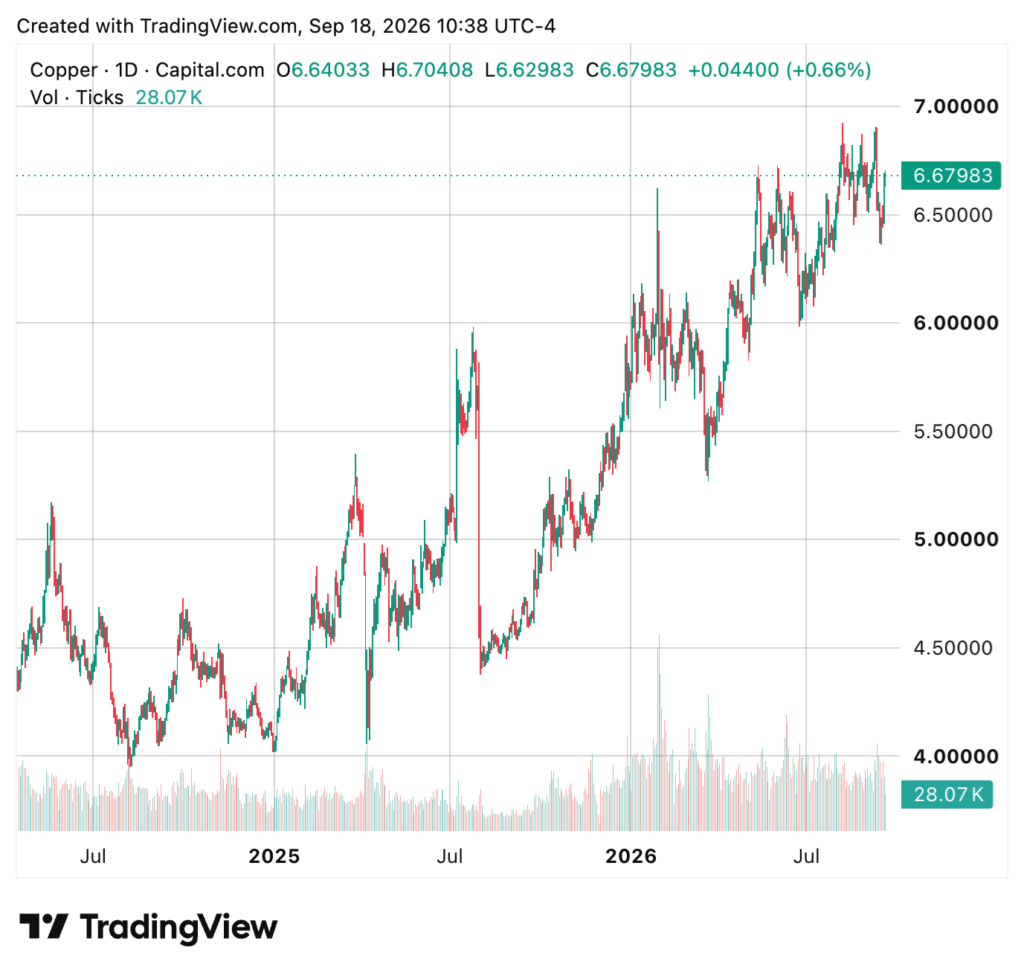
    Global mined copper output is on track for its first annual decline since 2017, with a 1.1% year-on-year drop in H1 2026 and about 600,000 tonnes of expected 2026 production lost from Grasberg and Kamoa-Kakula, equal to roughly 2.5% of global mine supply, Sprott reports. Chilean production, 23% of world mine output, fell 6.6% in H1 and 9.4% in July, with Cochilco now forecasting 5.27 Mt for 2026 and BHP’s Escondida guiding down to 1.0–1.1 Mt in FY 2027 despite record throughput. While refined copper still shows a modest surplus, US cathode imports hit a record 223,000 tonnes in July and COMEX inventories jumped 712% since February 2025 on tariff uncertainty, tightening freely available metal outside the US and boosting miners’ margins via lower treatment and refining charges.

    Technical Brief

    • Copper projects average 17.5 years from discovery to first production, limiting short‑term supply response.
    • Disruptions at Grasberg (Freeport-McMoRan) and Kamoa-Kakula (Ivanhoe Mines) underpin the 600,000‑tonne 2026 loss.
    • Codelco’s El Teniente Andes Norte development may be suspended up to two years after a fatal accident.
    • Antofagasta and Lundin Mining together removed 35,000–55,000 tonnes from 2026 guidance, partly due to Chilean winter storms.
    • At Escondida, record mining and concentrator throughput in FY 2026 still cannot offset declining copper feed grades.
    • Between 2000 and 2025, copper prices rose ~7× while Chilean mine output increased only 15%, evidencing grade/geology constraints.
    • U.S. cathode imports in July (223,000 tonnes) were roughly 3–6× typical pre‑2024 July volumes.
    • Anticipation of a possible 50% U.S. refined copper tariff previously drove COMEX prices to >30% over LME.
    • U.S. Commerce Department has proposed refined copper duties of 15% from 2027 and 30% from 2028, pending presidential approval.

    Our Take

    The projected 1.1% fall in global mine output alongside a 2.4% rise in refined copper production implies smelters are leaning harder on existing concentrate pipelines and secondary feed, which could tighten treatment charges and raise supply risk if large mines like Escondida or Grasberg underperform.

    With Chile still accounting for 23% of world mine production but showing mid‑single to high‑single digit output declines, operators in other copper regions such as the DRC’s Kamoa-Kakula complex and U.S.-linked assets covered in our recent Freeport-McMoRan pieces are positioned to gain pricing and negotiating leverage in offtake and JV discussions.

    Geotechnical Software for Modern Teams

    Centralise site data, logs, and lab results with GEODB-io, CMRR-io, and HYDROGEO-io.

    No credit card required.

    • Save and export unlimited calculations
    • Advanced data visualisation
    • Generate professional PDF reports
    • Cloud storage for all your projects

    Prepared by collating external sources, AI-assisted tools, and Geomechanics.io’s proprietary mining database, then reviewed for technical accuracy & edited by our geotechnical team.

    Related Articles

    US DOE critical minerals cleanup at legacy sites: key points for mine planners
    Mining
    about 2 hours ago

    US DOE critical minerals cleanup at legacy sites: key points for mine planners

    The US Department of Energy’s Office of Environmental Management has issued an expression of interest to US companies for potential transfer and recovery of surplus critical minerals and rare earth-related materials at five nuclear cleanup sites: Paducah (Kentucky), Portsmouth (Ohio), Oak Ridge (Tennessee), Nevada National Security Site and Moab (Utah). Targeted materials include aluminium, copper, lead, silver, platinum, tungsten, vanadium, fluorine, lithium hydride, chloride, selenium and cesium-137. Interested parties must supply their own extraction, processing and handling equipment, with DOE evaluating responses on technical capability and proposed end-use plans.

    Aura Minerals’ US$200M loan: project pipeline and capex lens for mine planners
    Mining
    about 2 hours ago

    Aura Minerals’ US$200M loan: project pipeline and capex lens for mine planners

    Aura Minerals has secured a US$200 million, five-year syndicated loan priced at SOFR (3.62% on Friday) plus 2.7%, with a two-year grace period, arranged by Citi and Itaú BBA, to support working capital as it ramps up an Americas growth phase. The funding coincides with construction of the Era Dorada gold project in Guatemala, a US$382 million build on a two-year schedule targeting about 111,000 gold-equivalent oz. per year in its first four years. Aura aims to lift group output to more than 600,000 gold-equivalent oz. annually from 313,000 oz. currently, while keeping net debt at 0.21× trailing EBITDA.

    Nigeria mining crackdown deaths: compliance and safety lessons for projects
    Mining
    about 2 hours ago

    Nigeria mining crackdown deaths: compliance and safety lessons for projects

    Thirty-seven detainees arrested in a Nigeria Security and Civil Defence Corps sweep on suspected illegal mining sites near Minna, Niger State, were found dead in custody, prompting a state-wide mining suspension and 24-hour curfew. Niger State, which reported 880 registered mining companies and cooperatives in 2024 but only 261 profiled, sits over 578 mineral titles including 369 for gold, with widespread unlicensed activity. Federal Mining Marshals, expanded to 2,570 officers, have flagged 374 suspected illegal sites since March 2024, yet prosecutions have yielded only five convictions from 165 cases involving 430 defendants.

    Related Industries & Products

    Mining

    Geotechnical software solutions for mining operations including CMRR analysis, hydrogeological testing, and data management.

    CMRR-io

    Streamline coal mine roof stability assessments with our cloud-based CMRR software featuring automated calculations, multi-scenario analysis, and collaborative workflows.

    HYDROGEO-io

    Comprehensive hydrogeological testing platform for managing, analysing, and reporting on packer tests, lugeon values, and hydraulic conductivity assessments.

    GEODB-io

    Centralised geotechnical data management solution for storing, accessing, and analysing all your site investigation and material testing data.

    AllGeotechnicalInfrastructureHazardsEnvironmental