Chemaf sale to US-backed Virtus: project pipeline and capex lens for mine planners
Reviewed by Tom Sullivan
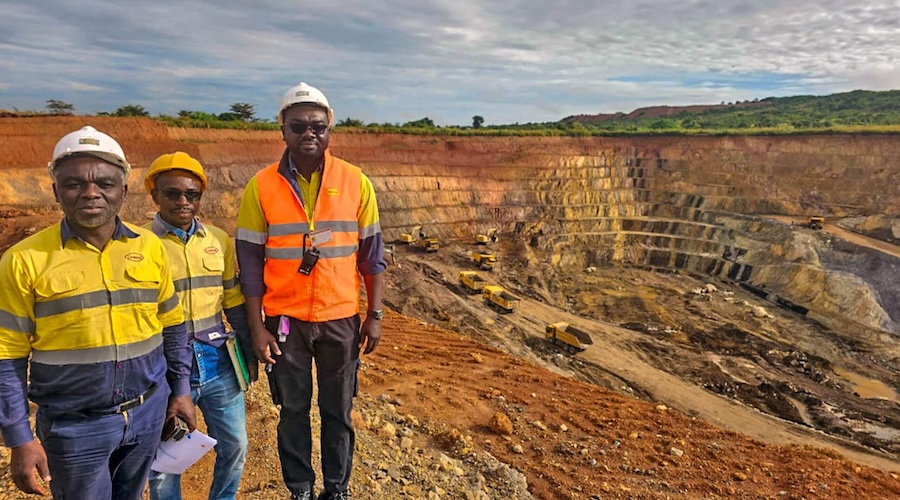
First reported on MINING.com
30 Second Briefing
Congo is poised to approve the $30 million acquisition of Chemaf by US-based Virtus Minerals, clearing the way for about $750 million of planned investment to restart the stalled Mutoshi copper-cobalt project and expand the Etoile operation. The deal, which requires state sign-off on changes of control for mining permit holders, has seen Gécamines leverage its position as lessor of a key Mutoshi permit after previously blocking a Chinese state-backed bidder. As an early test of the December US–Congo minerals pact, the transaction will signal how preferential access for US investors to Congolese copper and cobalt assets will be structured.
Technical Brief
- Virtus will assume Chemaf’s debts, including Trafigura’s $600 million project finance facility from 2022.
- Trafigura’s loan funded Mutoshi construction and capacity expansion at the existing Etoile copper-cobalt operation.
- Congo’s mines minister Louis Watum has formally notified Virtus of the state’s intention to clear the takeover.
- Virtus signed a purchase agreement in February with trustees representing about 95% of Chemaf’s equity.
- State miner Gécamines controls a critical Mutoshi permit that Chemaf only holds under a lease arrangement.
- Gécamines previously blocked a competing acquisition proposal from a Chinese state-backed bidder for the same assets.
- Congolese law requires explicit state approval for any change of control of mining permit holders such as Chemaf.
- The Chemaf–Virtus transaction sits alongside Orion CMC’s preliminary deal for stakes in Glencore’s DRC copper-cobalt mines.
- A proposed Mota Engil railway would connect the Congolese copperbelt to Angola’s Atlantic coast for export logistics.
- Together with the railway and Orion CMC deals, Chemaf’s sale forms part of the December US–Congo minerals pact implementation.
Our Take
Within our 275 cobalt- and copper-tagged pieces, the Democratic Republic of Congo dominates African coverage, so Virtus Minerals’ move into Chemaf’s Mutoshi and Etoile assets signals continued concentration of high-grade battery metals supply in the Copperbelt rather than diversification to newer African jurisdictions.
The relatively low equity acquisition price versus the planned US$750 million investment suggests Virtus is effectively paying for optionality on stalled copper-cobalt capacity, a pattern seen in other distressed African M&A where incoming owners treat sunk-capex assets as brownfield development plays rather than classic corporate takeovers.
Linking Chemaf’s Congo portfolio with American Rare Earths’ Halleck Creek rare earths project in Wyoming gives Virtus exposure to both African copper-cobalt and US critical minerals, aligning with a policy-driven push in Washington to secure non-Chinese supply chains for battery and magnet metals.
Prepared by collating external sources, AI-assisted tools, and Geomechanics.io’s proprietary mining database, then reviewed for technical accuracy & edited by our geotechnical team.
Related Articles


Related Industries & Products
Mining
Geotechnical software solutions for mining operations including CMRR analysis, hydrogeological testing, and data management.
Construction
Quality control software for construction companies with material testing, batch tracking, and compliance management.
CMRR-io
Streamline coal mine roof stability assessments with our cloud-based CMRR software featuring automated calculations, multi-scenario analysis, and collaborative workflows.
HYDROGEO-io
Comprehensive hydrogeological testing platform for managing, analysing, and reporting on packer tests, lugeon values, and hydraulic conductivity assessments.
GEODB-io
Centralised geotechnical data management solution for storing, accessing, and analysing all your site investigation and material testing data.