Australian gold output down 3%: operational and price drivers for mine planners
Reviewed by Joe Ashwell
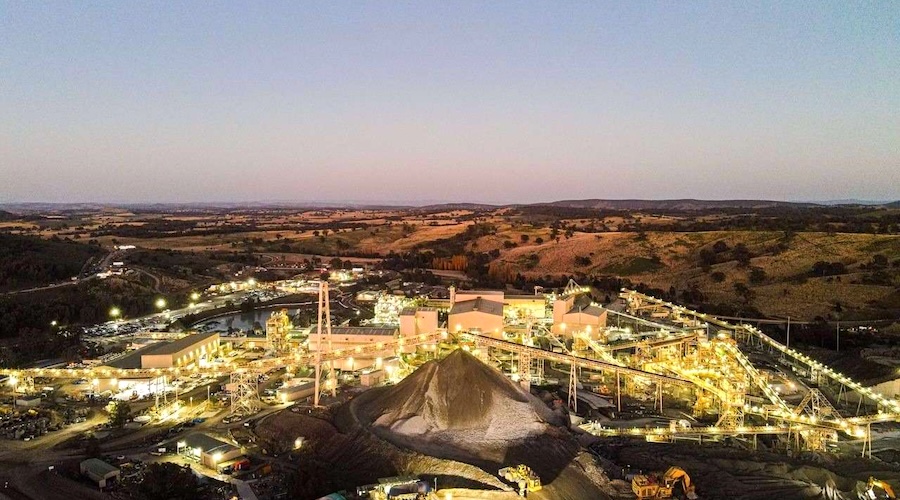
First reported on MINING.com
30 Second Briefing
According to Surbiton Associates Pty Ltd, Australian gold production slipped almost 3% quarter-on-quarter to 75 tonnes in Q1 2026, worth about A$17 billion, as heavy rain and bushfires disrupted operations at sites including Newmont’s Tanami (down 41,000 oz) and Boddington (down 35,000 oz) and Gold Fields’ Gruyere (down 20,200 oz). The impact was partly offset by higher output at Gold Fields’ Granny Smith (+19,600 oz), Newmont’s Cadia (+13,000 oz) and Northern Star’s KCGM Super Pit (+12,500 oz). Domestic gold prices swung from a record A$5,595/oz on 29 January to A$4,098/oz on 23 March, driven by Middle East tensions, portfolio rebalancing and central bank sales totalling 66 tonnes from countries including Turkey and Russia.
Technical Brief
- Prices then bottomed at A$4,098/oz on 23 March before partially recovering to A$4,336.60/oz.
- Portfolio rebalancing and margin calls, triggered by equity selloffs, accelerated short-term gold price drops.
- Central bank reserve sales of 66 tonnes (notably Turkey, Russia) added further downward pressure on spot prices.
Our Take
With Australian gold output at about 75 tonnes for the quarter but production value near A$17 billion, operators like Newmont, Northern Star Resources and Gold Fields are effectively being paid to prioritise margin over volume, which typically encourages deferral of higher‑cost cutbacks and more selective high‑grade scheduling at assets such as Cadia, Tanami and the KCGM Super Pit.
The reported 66 tonnes of gold reserve sales by countries including Turkey and Russia contrasts with strong price gains of about 70% year‑on‑year, signalling that macro‑driven central bank flows are now a major external variable for Australian producers’ hedging and treasury strategies rather than just mine‑site cost performance.
Newmont’s presence in several Australian operations mentioned here aligns with our coverage of its ramp‑up at Cadia after the April earthquake, underscoring that any production interruptions at a single large New South Wales asset can now move the needle on national quarterly figures when total output is only around 75 tonnes.
Prepared by collating external sources, AI-assisted tools, and Geomechanics.io’s proprietary mining database, then reviewed for technical accuracy & edited by our geotechnical team.
Related Articles
Related Industries & Products
Mining
Geotechnical software solutions for mining operations including CMRR analysis, hydrogeological testing, and data management.
CMRR-io
Streamline coal mine roof stability assessments with our cloud-based CMRR software featuring automated calculations, multi-scenario analysis, and collaborative workflows.
HYDROGEO-io
Comprehensive hydrogeological testing platform for managing, analysing, and reporting on packer tests, lugeon values, and hydraulic conductivity assessments.
GEODB-io
Centralised geotechnical data management solution for storing, accessing, and analysing all your site investigation and material testing data.