Geomechanics.io

  • Free Tools
Sign UpLog In
Built byBoxcut Studio

Geomechanics.io

Geomechanics, Streamlined.

© 2026 Geomechanics.io. All rights reserved.

Geomechanics.io

CMRR-ioGEODB-ioHYDROGEO-ioQCDB-ioFree Tools & CalculatorsBlogLatest Industry News

Industries

MiningConstructionTunnelling

Company

Terms of UsePrivacy PolicyLinkedIn
    Projects
    Safety

    BHP Jansen learnings: cost and schedule risk notes for potash project teams

    December 2, 2025|

    Reviewed by Joe Ashwell

    BHP Jansen learnings: cost and schedule risk notes for potash project teams

    First reported on MINING.com

    30 Second Briefing

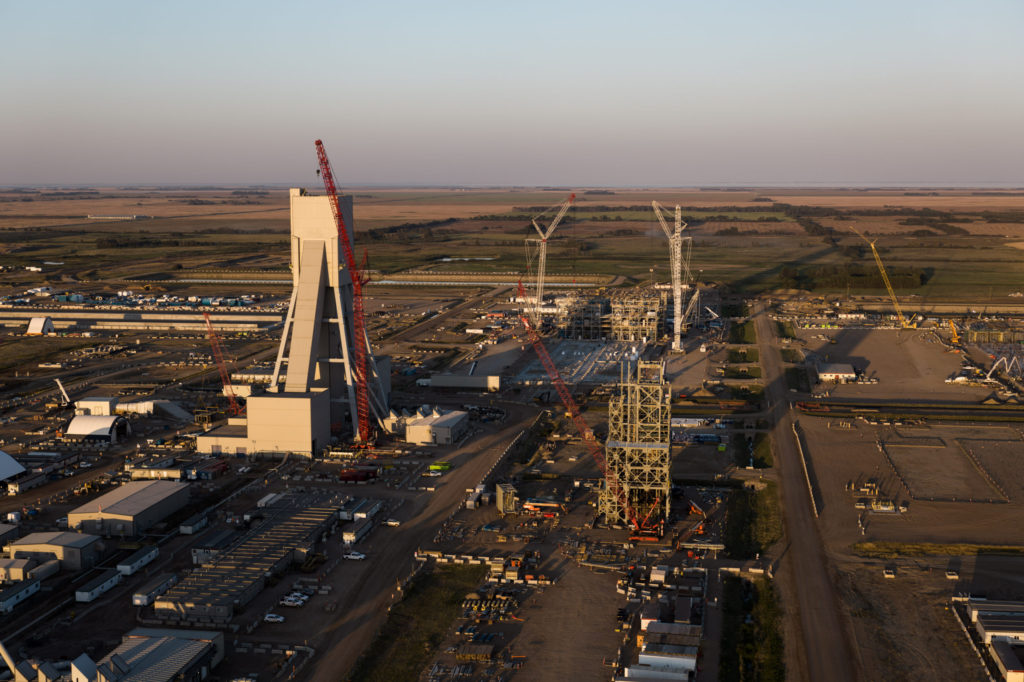
    BHP’s Americas president Rag Udd says construction “learnings” from the C$14 billion Jansen Stage 1 potash project in Saskatchewan will be critical to containing costs and schedule risk on the planned Stage 2 expansion. He points to early contractor engagement, modular shaft and headframe construction, and tighter interface management between underground development and surface processing as key process changes. For engineers, BHP’s approach signals closer scrutiny of geotechnical risk, labour productivity and materials logistics before committing further capital to large-scale potash infrastructure.

    Technical Brief

    • Underground development interfaces with a large surface processing plant, increasing coordination and SIMOPS safety risk.
    • Saskatchewan’s deep potash seams and weak evaporites demand rigorous ground control and shaft lining design.
    • Harsh winter conditions in Saskatchewan impose cold-weather construction procedures and worker exposure controls.
    • BHP is positioning Jansen as a long-life, multi-stage district asset, amplifying cumulative safety and reliability requirements.
    • For other large potash basins, Jansen’s interface and SIMOPS management approach is likely to be closely scrutinised.

    Our Take

    Potash appears in only a handful of keyword‑matched pieces in our database, but several, including the recent Wynyard and Karnalyte studies in Saskatchewan, emphasise very long mine lives, so BHP’s ability to control Jansen costs will be critical to staying competitive over multi‑decade horizons.

    With BHP simultaneously pursuing large corporate moves around Anglo and Teck, Jansen’s potash performance will likely be scrutinised internally as a proof point that organic project execution can deliver value comparable to big‑ticket M&A.

    Given the UK High Court’s recent finding against BHP Group over the Fundão tailings failure, any ‘learnings’ at Jansen that demonstrably improve safety and risk management will carry added weight with regulators and investors beyond the potash sector.

    Geotechnical Software for Modern Teams

    Centralise site data, logs, and lab results with GEODB-io, CMRR-io, and HYDROGEO-io.

    No credit card required.

    • Save and export unlimited calculations
    • Advanced data visualisation
    • Generate professional PDF reports
    • Cloud storage for all your projects

    Prepared by collating external sources, AI-assisted tools, and Geomechanics.io’s proprietary mining database, then reviewed for technical accuracy & edited by our geotechnical team.

    Related Articles

    McEwen’s $55M Ontario asset sale: production growth lens for mine planners
    Mining
    about 3 hours ago

    McEwen’s $55M Ontario asset sale: production growth lens for mine planners

    McEwen has agreed to sell its Fuller and Paymaster gold properties in Ontario’s Timmins district to Discovery Mining for $55 million in cash and stock, freeing capital to push a production target of 250,000–300,000 gold-equivalent ounces per year by 2030. The deal covers 210 hectares at Fuller, a 60% stake in the 179-hectare Paymaster property, and associated surface rights, consolidating Paymaster under Discovery’s Dome Mine subsidiary. Proceeds will be reinvested into the Fox Complex (Froome, Stock, Grey Fox), Nevada’s Gold Bar Complex, and Mexico’s El Gallo build, with Stock Mine slated for first ore in Q4 2026 and commercial output in Q1 2027.

    Lithium Triangle extraction hurdles: hydrogeological insights for project teams
    Mining
    about 3 hours ago

    Lithium Triangle extraction hurdles: hydrogeological insights for project teams

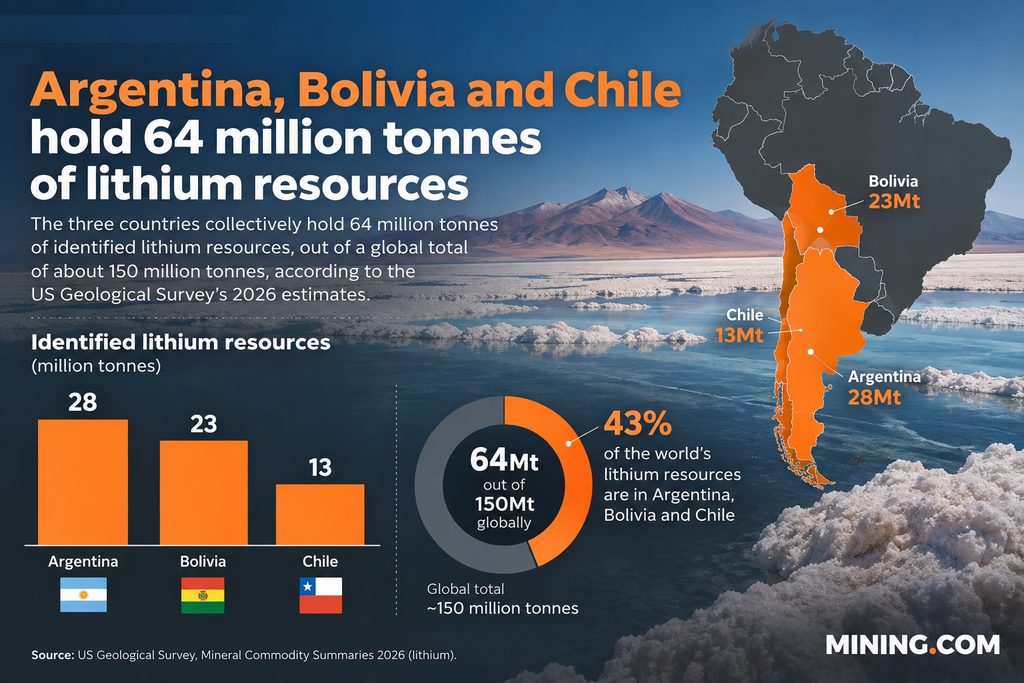
    South America’s Lithium Triangle holds about 64 million tonnes of identified lithium resources (43% of the global 150 million tonnes), yet geologist José Cabello’s review of 43 salt flats across Argentina, Bolivia and Chile shows that variable brine chemistry, impurities and groundwater behaviour make recovery and costs highly site-specific. Salar de Atacama benefits from ultra‑dry climate, relatively clean brines and strong logistics, while other basins such as Altoandinos, Pedernales, Hombre Muerto Oeste, Rincón, Sal de los Ángeles and Sal de Vida face tighter water and hydrogeological constraints. Direct lithium extraction (DLE) could unlock lower‑grade or impurity‑rich brines, but Cabello stresses that trade‑offs between brine withdrawal and freshwater consumption mean technology selection must be tailored to each basin’s hydrology and ecosystem.

    KGHM’s $2.4bn copper projects fast-tracked: CRMA implications for mine planners
    Mining
    about 3 hours ago

    KGHM’s $2.4bn copper projects fast-tracked: CRMA implications for mine planners

    EU regulators have granted strategic status under the Critical Raw Materials Act to KGHM’s 9.5‑billion‑zloty ($2.44bn) Retków‑Grodziszcze mine and Legnica smelter conversion, unlocking faster permitting, streamlined administration and access to preferential financing. Retków‑Grodziszcze is planned to deliver over 100 million tonnes of ore by 2055, yielding about 1.5 million tonnes of copper and 5,000 tonnes of silver, while Legnica’s recycling line targets 135,000 tonnes of electrolytic copper and 250 tonnes of nickel per year. The move materially boosts EU copper and nickel recycling capacity, central to the CRMA’s 25% recycling target.

    Related Industries & Products

    Mining

    Geotechnical software solutions for mining operations including CMRR analysis, hydrogeological testing, and data management.

    Construction

    Quality control software for construction companies with material testing, batch tracking, and compliance management.

    CMRR-io

    Streamline coal mine roof stability assessments with our cloud-based CMRR software featuring automated calculations, multi-scenario analysis, and collaborative workflows.

    HYDROGEO-io

    Comprehensive hydrogeological testing platform for managing, analysing, and reporting on packer tests, lugeon values, and hydraulic conductivity assessments.

    GEODB-io

    Centralised geotechnical data management solution for storing, accessing, and analysing all your site investigation and material testing data.

    AllGeotechnicalInfrastructureHazardsEnvironmental